

My Favourite Tools & Materials for Creating Art Prints
Holly on 23rd Mar 2026
People often ask what I use to make my art prints — and the answer is, a bit of everything! Over the years, I’ve tried and tested so many materials, chasing different colours, textures and feelings. Each one has its quirks, and depending on the day (and the amount of quiet time I have as a mum), I tend to reach for different tools. So I thought I’d share a little peek behind the curtain.
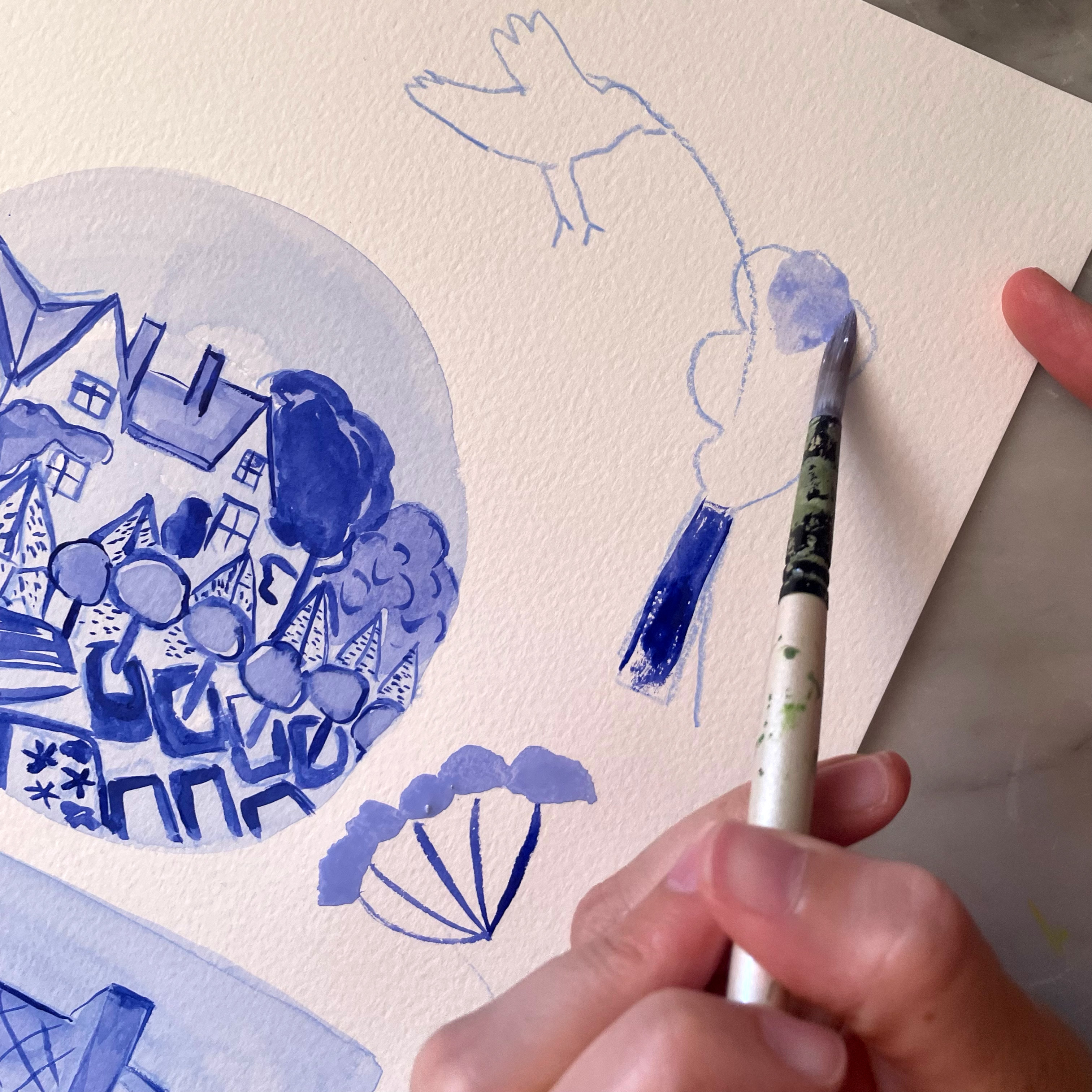
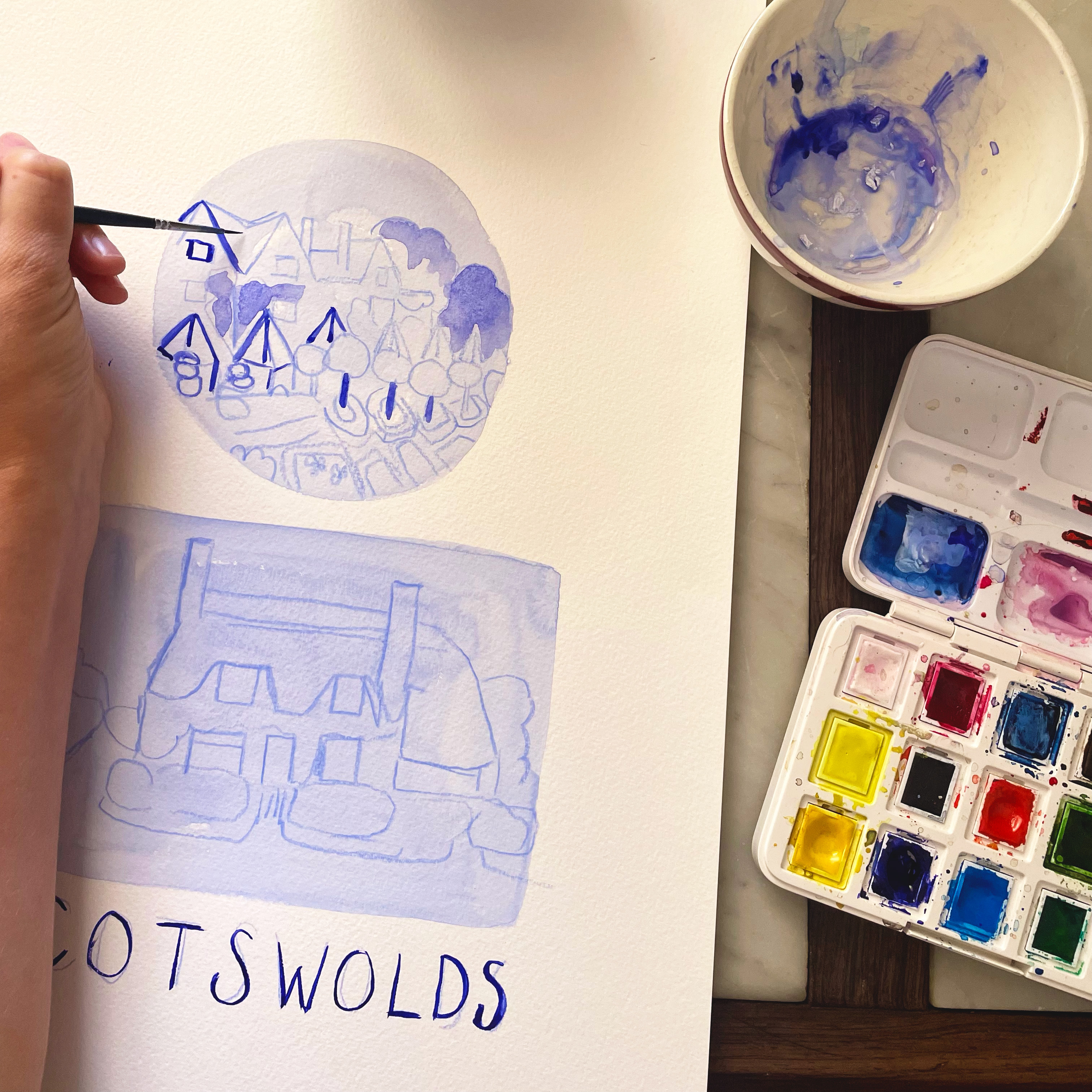
Watercolours are where I started, and they’re still the medium I reach for the most. There’s something about the fluidity — how the paint moves, how it surprises you. I love the looseness of it, the unpredictability. It also suits my current life rhythm — with two little ones, watercolours are easier to dip in and out of when time’s tight.
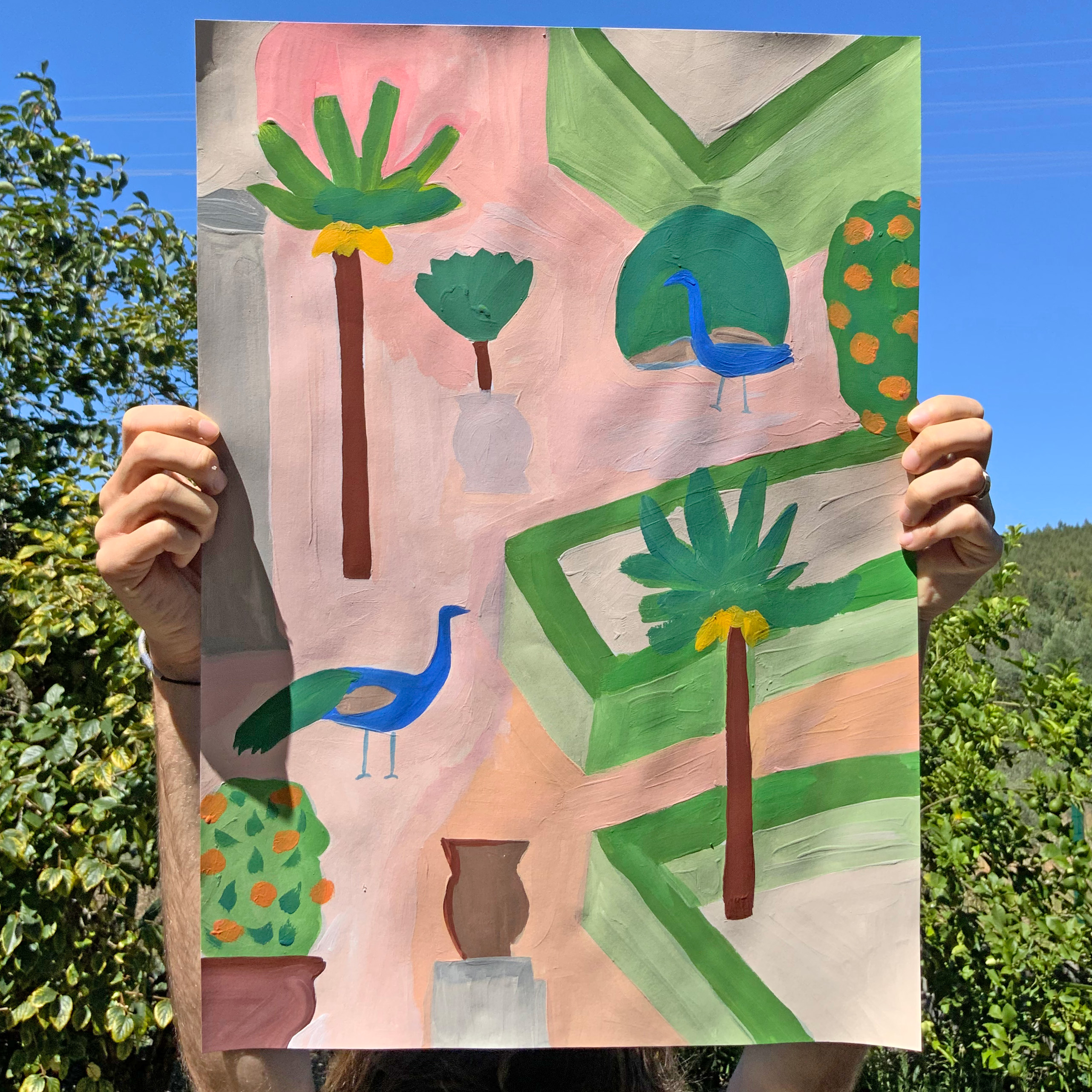
I do love acrylics, though they can be a bit more demanding. You mix the perfect colour, but if it dries before you’ve finished, it’s hard to match again exactly. That said, they bring a boldness and coverage that’s hard to beat, especially for certain travel scenes. I’ve recently discovered Le Franc Bourgeois Flashe paints, which are pre-mixed, matte acrylics. Total game changers. They’re fast, easy to grab, and give you that lovely, flat colour that’s perfect for print-making.
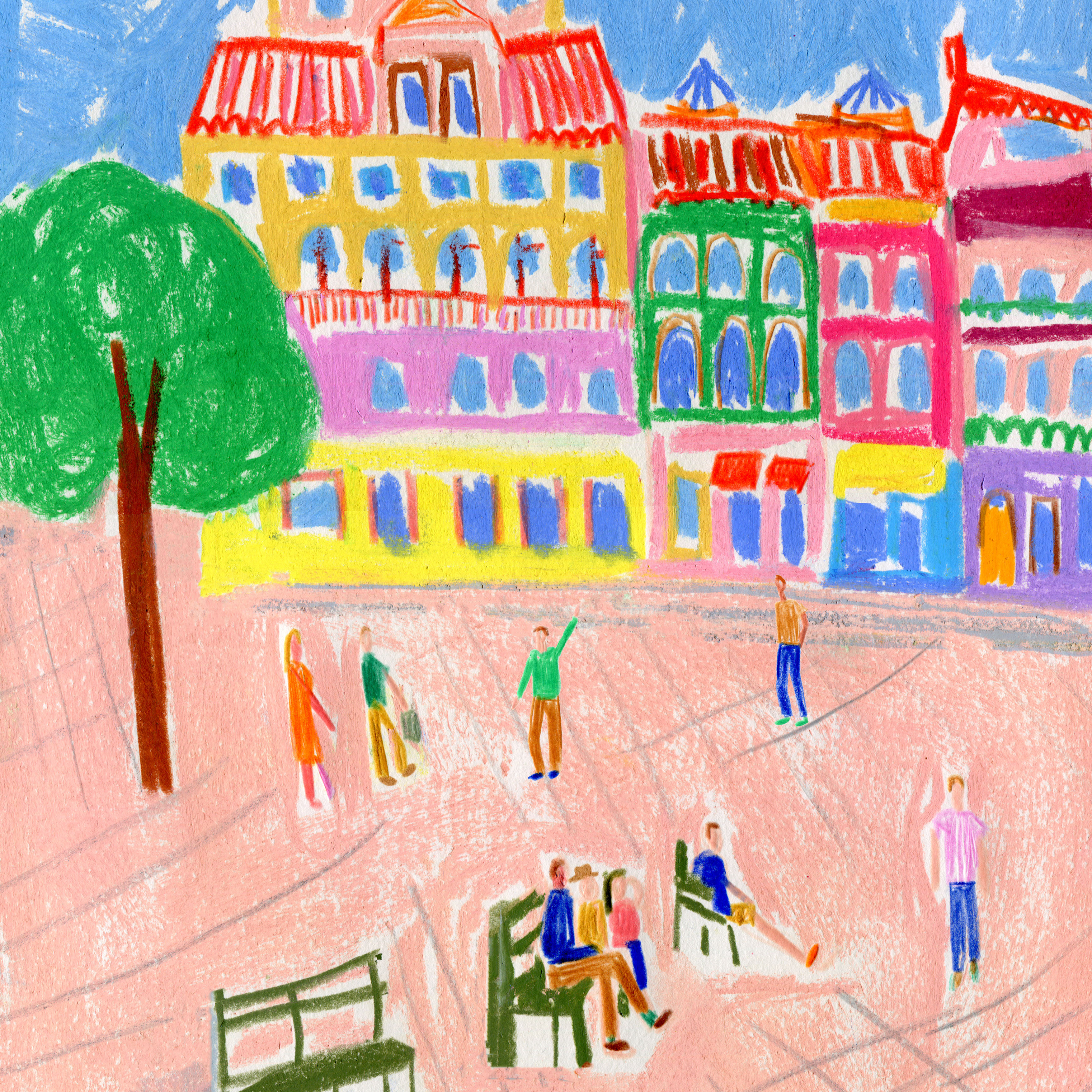
Then there are soft pastels, which I use when I want that immediate hit of colour. There’s so much depth and richness — the texture, the pigment, the way it clings to the paper. It’s messy, yes, but rewarding. Coloured pencils are another favourite for smaller details. They're so portable — easy to take along when travelling or working in different rooms at home. They’re not the cheapest, especially when you go through them quickly, and I feel like I’m always sharpening. But they offer a mindful, slower pace, and sometimes that’s exactly what I need.
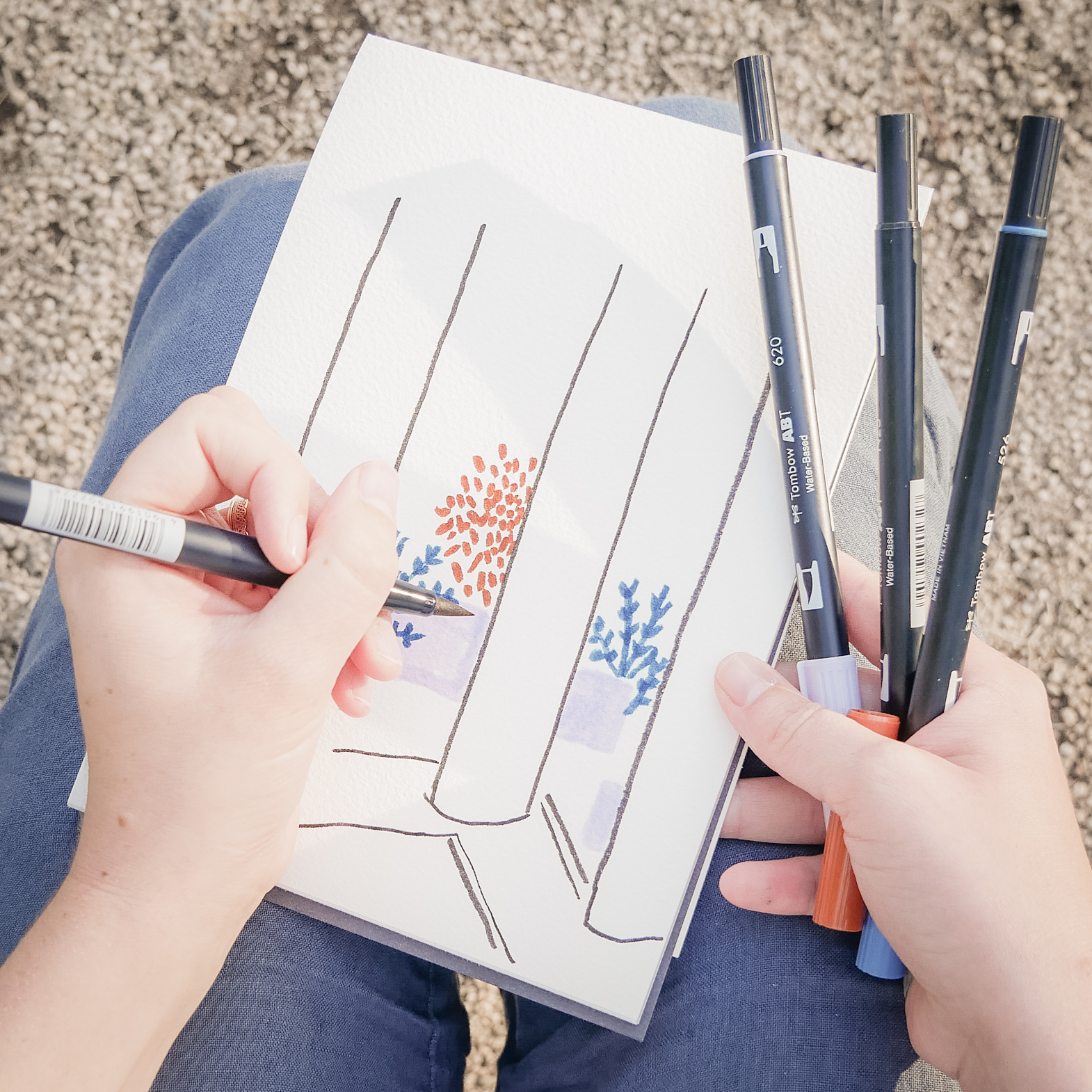
I love mixing these materials to get different results across our print ranges — sometimes blending pencil and paint in one piece, sometimes switching completely depending on the subject.
There’s no perfect kit, really. Just a lot of playing, layering, experimenting (and a bit of a mess). But that’s the fun part!